How Many Watts Does a Countertop Microwave Need?
A 1000 watt microwave suits everyday reheating, defrosting, and simple cooking. Choose the controls and dish capacity you need, or consider 1200 watts if shorter cooking times matter.
On this page (8 sections)
- Is a 1000 watt microwave powerful enough?
- Which model suits your cooking routine?
- Should you choose 1000 or 1200 watts?
- How much counter and dish space do you need?
- How should you set up and care for it?
- Which cooking mistakes should you avoid?
- Frequently asked questions
- Which 1000 watt microwave should you choose?
A 1000 watt microwave is a practical choice for reheating leftovers, defrosting ingredients, and cooking everyday meals. For most buyers, useful controls and room for their dishes matter more than moving up to 1200 watts.
Start with the foods you make most often, then check counter fit and door operation. Our countertop microwave buying guide explains the broader choices if you're replacing an older appliance.
Is a 1000 watt microwave powerful enough?
Yes, 1000 watts suits routine household cooking and reheating. It offers a useful middle ground for meals, drinks, vegetables, and defrosting without making higher output a requirement.
The main limit is often the food load. A deep bowl of dense leftovers needs more attention than a thin layer spread across a plate, even when both fit inside.
Wattage describes cooking output, not how evenly every meal will heat. Stirring, food placement, and standing time remain part of getting the center ready without drying the edges.
What does 1000 watt microwave mean?
A 1000 watt microwave delivers that rated level of microwave cooking output at full power. Its lower power settings let you slow the heating for foods that need gentler treatment.
Use lower power for tasks such as softening butter or reheating a delicate sauce. Full power is useful for quick heating, but it shouldn't be the default for every food.
Which model suits your cooking routine?
Choose BLACK+DECKER for familiar food shortcuts, Sharp for staged cooking, or Chefman for quiet operation. The Panasonic suits buyers who want sensor controls and higher output.
The first 3 models each have a 1.1 cu ft capacity and 10 power levels. Their differences are mainly in the controls, door design, and everyday tasks they make easier.
BLACK+DECKER for common meals and snacks
The BLACK+DECKER suits people who want dedicated food buttons rather than entering a cooking time for every task. Its 6 presets cover popcorn, potato, pizza, frozen vegetables, beverages, and dinner plates.
It also has a large LED display, a kitchen timer, a child safety lock, and a push-button door release. That door style is worth considering if you prefer pressing a button to pulling a handle.
Choose it for a mix of snacks and plated leftovers. Skip it if silencing beeps is a priority, since Chefman offers a dedicated mute control.
Sharp for defrosting and staged cooking
The Sharp suits cooks who want more control over a cooking sequence. Its 2-stage cooking feature lets you plan a change in cooking settings within one program.
Weight and time defrost give you different ways to start thawing ingredients. Express Cook provides single-press cooking for up to 6 minutes, while the +30 seconds key handles small additions.
Choose Sharp if you'll use staged cooking or its Orville Redenbacher's Certified popcorn presets. Skip it if your routine is mainly entering a time and pressing Start, since those extra controls may add little value for you.
Chefman for early mornings and shared kitchens
The Chefman suits households where quiet controls matter. Its Sound Button mutes beeps, which is useful near sleeping areas or when people keep different schedules.
Its 3 presets cover popcorn, beverages, and leftovers. Number-key shortcuts and a +30 seconds button support quick manual use without relying on a long menu.
The handle's child safety lock requires an upward pull on its top edge to open the door. Choose it if that action suits everyone who will use it; skip it if someone needs a different door mechanism.
Panasonic for sensor cooking and gentler power control
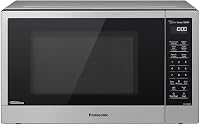
The Panasonic NN-SN65KB suits buyers who want sensor cooking and inverter power control. It has 1200 watts of output, 11 power levels, 10 sensor cook settings, and sensor reheat.
Panasonic says its inverter supplies continuous cooking power rather than cycling full power on and off at lower settings. Read what an inverter microwave is to decide whether that approach fits your cooking.
Choose it if you want automatic adjustments for varied meals, along with Keep Warm and Turbo Defrost. Skip it if you need to follow 1000 watt directions closely or prefer simple manual controls.
Our guide to microwave sensor cooking explains when automatic settings help and why food preparation still matters.
Should you choose 1000 or 1200 watts?
Choose 1000 watts when it matches your regular meals and directions. Consider 1200 watts if you often heat larger portions or want shorter cooking cycles.
Higher output can reduce heating time, but the difference won't be identical for every dish. Don't move food between appliances and assume the same time will give the same result.
A higher-output model also doesn't replace stirring or standing time. Those steps help heat spread through the food after the microwave stops.
If you mostly warm drinks, reheat lunch, and cook single portions, focus on the door and buttons you'll use daily. Frequent defrosting or varied cooking makes power controls and programs more useful.
How much counter and dish space do you need?
Measure the appliance space and your largest regular dish before choosing. Cubic-foot capacity alone won't tell you whether a rectangular container can rotate freely.
These are the exterior dimensions, before adding the ventilation space required by each manual:
| Model | Width | Depth | Height |
|---|---|---|---|
| BLACK+DECKER | 20.6 in | 14.8 in | 11.8 in |
| Sharp | 20.6 in | 14.7 in | 11.8 in |
| Chefman | 20.1 in | 14.47 in | 11.99 in |
| Panasonic | 20.7 in | 15.8 in | 12.2 in |
BLACK+DECKER and Sharp have 12.4 in turntables. Panasonic has a 13.4 in turntable within a 1.2 cu ft cavity, giving you more plate space to consider.
Allow room to open the door and lift out a hot dish without reaching around nearby appliances. Use our countertop microwave sizes and dimensions guide to plan the space.
For a tight counter, compare small countertop microwaves. If you're considering an enclosed shelf, read whether a countertop microwave can go in a cabinet before choosing a location.
How should you set up and care for it?
Set the microwave on a stable, level surface with the required ventilation clearance. Follow its manual for outlet requirements, placement, and any first-use steps.
Cooking output isn't the electrical input figure. For example, BLACK+DECKER specifies 1000 watts of output and 1600 watts of input, so use the input requirements when checking the power supply.
Fit the roller support and turntable correctly before use. Learn the child-lock procedure and show other users how to open the door before placing hot food inside.
Wipe splashes with a soft cloth and mild cleaner once the interior has cooled. Keep the door's contact surfaces clean, and don't let food build up under the turntable.
Remove the glass tray carefully and let it cool before washing. Chefman's turntable is dishwasher-safe; follow the care instructions for the other models.
Which cooking mistakes should you avoid?
Avoid full power for every task and long, unchecked heating cycles. Shorter intervals and the right power setting give you more control over food that dries out, boils over, or melts quickly.
- Don't crowd food into a deep pile. Spread it out when possible, and stir or rearrange it as directed.
- Don't skip standing time. Let the food rest for the time stated in its instructions before serving.
- Don't treat presets as a doneness check. Portion size and starting temperature can differ from the program's assumptions.
- Don't heat sealed containers. Use microwave-safe cookware and vent covers as directed.
- Don't judge food by the bowl's temperature. Check the food itself, including the center, and use a thermometer when required.
When switching wattages, follow any adjustments on the food package first. A fixed percentage change in time is only a rough estimate and can leave some foods overcooked or unevenly heated.
Frequently asked questions
Food size and cooking directions matter alongside wattage. These answers cover the main questions to settle before choosing a model.
Is a 1000 watt microwave powerful enough?
Yes, a 1000 watt microwave suits reheating meals, cooking everyday foods, and defrosting. Portion size and food thickness still affect cooking time, so stir or rearrange food as directed, allow standing time, and check the center rather than judging readiness by a hot bowl or surface.
Is 1000 watts better than 1200 watts for a microwave?
Choose 1000 watts for routine use and consider 1200 watts when shorter cooking times matter. Capacity, door operation, and controls can matter more than the output difference; if you regularly use packaged meals, compare their cooking directions with the microwave's output before deciding which fits your routine.
How do I convert microwave cooking times for different wattages?
Use the wattage instructions on the food package or recipe first. If those instructions don't cover your microwave, check progress and add short intervals rather than relying on a fixed conversion; food shape, portion size, and starting temperature affect results, and stirring and standing steps still matter.
Does a higher wattage microwave use more electricity?
Energy use depends on electrical input and running time, rather than cooking output alone. A more powerful microwave may finish sooner, while a lower-output model may run longer; compare input figures for electrical requirements and consider the cooking duration when thinking about the energy used for a meal.
Which 1000 watt microwave should you choose?
Choose your 1000 watt microwave by the task you repeat most: BLACK+DECKER for food shortcuts, Sharp for staged cooking and defrost controls, or Chefman for muted beeps. Confirm that the door action and your usual dishes suit the model before ordering.
Choose Panasonic if sensor cooking and inverter control matter enough to move up in output. For more options beyond these 4 models, compare our best countertop microwaves.
Frequently asked questions
Is a 1000 watt microwave powerful enough?
Yes, a 1000 watt microwave suits reheating meals, cooking everyday foods, and defrosting. Portion size and food thickness still affect cooking time, so stir or rearrange food as directed, allow standing time, and check the center rather than judging readiness by a hot bowl or surface.
Is 1000 watts better than 1200 watts for a microwave?
Choose 1000 watts for routine use and consider 1200 watts when shorter cooking times matter. Capacity, door operation, and controls can matter more than the output difference; if you regularly use packaged meals, compare their cooking directions with the microwave's output before deciding which fits your routine.
How do I convert microwave cooking times for different wattages?
Use the wattage instructions on the food package or recipe first. If those instructions don't cover your microwave, check progress and add short intervals rather than relying on a fixed conversion; food shape, portion size, and starting temperature affect results, and stirring and standing steps still matter.
Does a higher wattage microwave use more electricity?
Energy use depends on electrical input and running time, rather than cooking output alone. A more powerful microwave may finish sooner, while a lower-output model may run longer; compare input figures for electrical requirements and consider the cooking duration when thinking about the energy used for a meal.