Which Countertop Microwave Brand Is Best?
Panasonic is the best countertop microwave brand here for buyers who want inverter cooking and sensor controls. Choose GE for more capacity, Sharp for two-stage cooking and quick controls, or BLACK+DECKER for familiar food presets.
On this page (10 sections)
- Which countertop microwave brand is best for your needs?
- What makes Panasonic a strong countertop microwave brand?
- When does GE make sense?
- Is Sharp a good choice for everyday cooking?
- What does BLACK+DECKER offer?
- How should you compare countertop microwave brands before buying?
- How should you set up a new countertop microwave?
- How can you get better results from any of these brands?
- What mistakes should you avoid when choosing a brand?
- Which countertop microwave brand should you choose?
Panasonic is the best countertop microwave brand here for buyers who want inverter cooking and sensor controls together. GE is the stronger fit for larger portions, while Sharp and BLACK+DECKER suit everyday heating with quick buttons and manual settings.
The right choice depends on your dishes, counter space and cooking habits. These 4 models give you distinct reasons to choose each brand, without assuming that every microwave carrying the same name works the same way.
Which countertop microwave brand is best for your needs?
Choose Panasonic for power control, GE for capacity, Sharp for staged cooking, or BLACK+DECKER for familiar presets. Start with the task you repeat most, then check whether the model fits your kitchen.
| Brand and model | Capacity | Cooking power | Main reason to choose it |
|---|---|---|---|
| BLACK+DECKER 1.1 Cu Ft Microwave | 1.1 cu ft | 1000 watts | Six food presets and a push-button door |
| Sharp 1.1 Cu Ft Countertop Microwave | 1.1 cu ft | 1000 watts | Two-stage cooking and quick-start controls |
| GE 1.4 Cu Ft Countertop Microwave | 1.4 cu ft | 1100 watts | More cavity space and sensor cooking |
| Panasonic NN-SN65KB Inverter Microwave | 1.2 cu ft | 1200 watts | Inverter technology and sensor cook functions |
Capacity describes the space inside, while cooking power helps you compare heating output. Neither tells you whether your casserole dish fits or whether you can reach the controls comfortably.
These are specific model recommendations, not a ranking of each brand's full range or long-term reliability. For a broader explanation of sizes and cooking features, use our countertop microwave buying guide.
The best countertop microwave brand for your daily routine
Choose based on what you'll do most days. A microwave used for soup and coffee needs different controls from one used to thaw ingredients and prepare several meal components.
If you often adjust power for delicate foods, Panasonic deserves the closest look. If your main frustration is a crowded cavity, start with GE and measure your dishes.
Sharp suits people who like to set a cooking sequence and let it run. BLACK+DECKER suits people who want recognizable food buttons and straightforward time-and-power controls.
Don't choose a feature just because it sounds advanced. Think through yesterday's meals and decide which controls would have saved effort.
What makes Panasonic a strong countertop microwave brand?
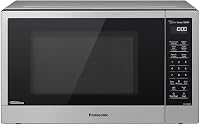
Panasonic suits cooks who want inverter power control and sensor cooking in the same appliance. The NN-SN65KB is the most feature-focused choice here for reheating, lower-power cooking and thawing.
Its inverter technology supplies continuous cooking power rather than relying on full-power bursts separated by pauses at reduced settings. Panasonic says this approach helps heat food more evenly from the edges toward the center.
That makes it worth considering if you regularly soften butter, warm sauces or reheat foods that need a gentler setting. Food arrangement, stirring and standing time still matter, especially with dense or uneven portions.
Genius Sensor adjusts power and cooking time, with 10 sensor cook settings and a separate sensor reheat function. There are also 15 auto cook options, Turbo Defrost and a 3-level popcorn button.
Keep Warm can hold suitable foods warm for up to 30 minutes. Use it for a short serving delay, following the manual's directions, rather than treating it as a substitute for proper food storage.
The microwave measures about 20.7 in wide, 15.8 in deep and 12.2 in high, with a 13.4 in turntable. Check the cavity opening and dish shape as well as turntable diameter.
Choose it if you expect to use reduced power or automatic reheating often. Skip it if you mainly want a quick-start button, or if GE's larger cavity better matches your serving dishes.
The Panasonic includes a child lock, so learn its opening sequence before placing the appliance where several people will use it. Our guide to what an inverter microwave is explains the power-control difference in more detail.
When does GE make sense?
GE makes sense when larger portions and sensor cooking matter more than inverter technology. The GCST14S1WBB has the largest stated capacity among these choices.
Its moisture-sensing controls adjust cooking time as food heats. This is useful for buyers who want help judging reheating time rather than choosing a fixed food preset and stopping there.
One-touch express cooking and 7 convenience settings cover quick tasks. Manual and auto defrost give you a choice between entering your own timing and using a guided thawing program.
The digital display and electronic keypad also let you choose time and power directly. Its child lock can be disabled when you don't need it, following GE's instructions.
Allow for an exterior of about 21.88 in wide, 16.38 in deep and 12.5 in high. GE requires 3 in of clearance on each side and above, plus 1 in at the rear, with the bottom unobstructed.
That clearance turns a roughly 22-inch-wide appliance into a space commitment of nearly 28 inches across. Measure the whole placement area before deciding that it fits beneath a cabinet or beside another appliance.
Choose GE for shared meals or dishes that feel cramped in a smaller cavity, after confirming the actual dish fits. Skip it if preserving counter space is your main goal or if inverter control is the feature you want most.
A larger capacity still doesn't guarantee room for every rectangular dish. If you prefer this brand, our best GE countertop microwaves guide helps you compare other models.
Is Sharp a good choice for everyday cooking?
Sharp is a good choice for buyers who prefer quick manual controls and two-stage cooking. The SMC1162KS gives you a useful middle ground between basic reheating and sensor-focused operation.
Two-stage cooking lets you program a sequence instead of returning to enter the next stage. That suits recipes that call for one power level followed by another.
The controls include 10 power levels, a +30 seconds key and Express Cook for single-press starts up to 6 minutes. Weight and time defrost let you choose the approach that fits the food and information you have.
Sharp also includes Orville Redenbacher's Certified Popcorn Presets. Treat any popcorn program as a starting point and follow the bag's instructions, since bag size and popping progress still need attention.
The exterior measures 20.6 in wide, 14.7 in deep and 11.8 in high, and the removable Carousel turntable is 12.4 in across. Its dimensions are close to the BLACK+DECKER model, so controls are a useful way to separate them.
Choose Sharp if you like setting cooking times yourself and expect to use staged programs. Skip it if automatic sensor reheating is your main reason for replacing an older microwave.
You don't need two-stage cooking just to warm a mug. Its value grows when you follow repeatable cooking routines that would otherwise require a second round of button presses.
What does BLACK+DECKER offer?
BLACK+DECKER suits buyers who want familiar food presets and direct manual control. Its 6 preset buttons cover popcorn, potatoes, pizza, frozen vegetables, beverages and dinner plates.
The model has 10 power settings, a 30-second express function, a clock and a kitchen timer. Its large LED display and easy-to-read control panel are worth considering if you want clearly presented controls.
A push-button release opens the door, which may suit you better than pulling a handle. Think about where your other hand will be when carrying a plate, and make sure the release stays within easy reach.
It measures 20.6 in wide, 14.8 in deep and 11.8 in high. A stainless steel door frame sits against a black enclosure, which matters if you're matching nearby appliances.
Choose BLACK+DECKER if its food buttons match your usual snacks and leftovers. Skip it if you specifically want sensor cooking, inverter power control or Sharp's two-stage function.
The presets save button presses, but portion size still affects the result. Start conservatively with unfamiliar foods, stir where practical and add short bursts rather than committing to one long cycle.
Its child safety lock is another control to learn before everyday use. Make sure everyone who needs the microwave understands how to operate it without guessing.
How should you compare countertop microwave brands before buying?
Check dish fit and placement first, then choose useful cooking controls. This order prevents you from buying an appealing feature set in an appliance that crowds your counter or won't hold your usual plate.
Measure the dishes you actually use
Check your largest dinner plate, widest bowl and most-used storage container. Include handles, lids and any extra height needed to lift the dish out.
A round turntable measurement doesn't describe every usable inch inside. A rectangular container may strike the cavity wall as it rotates even when its shorter side seems to fit.
Leave room to grip hot dishes with oven mitts. A tight fit that works with an empty container can become awkward once it holds soup or a heavy meal.
Separate cooking watts from electrical demand
Use cooking wattage to compare output, but follow the appliance label and manual for electrical requirements. Cooking output and the power drawn from the outlet are different measurements.
Package directions often assume a particular microwave wattage. If your new model has more cooking power than your old one, begin with a shorter time and add heat in small steps.
More power is useful for speed, while reduced-power settings help with gentler tasks. Full power isn't the best choice for every food.
Decide between sensors, presets and manual control
Sensors respond to cooking conditions; presets start a programmed routine. A potato button and a moisture-sensing program aren't interchangeable features.
Panasonic and GE are the choices here for sensor functions. Sharp and BLACK+DECKER suit buyers who are comfortable choosing times or using familiar preset programs.
Manual controls remain useful on any model, especially for unusual portions or foods outside the automatic programs. Our guide to how microwave sensor cooking works explains when automatic adjustments help.
Check access as well as size
Look at the display position, door opening and space in front of the microwave. You should be able to move a hot bowl to a nearby stable surface without stretching over another appliance.
If the counter is crowded, consider placement before settling on a brand. Our small countertop microwave guide can help you compare alternatives when these models take too much space.
How should you set up a new countertop microwave?
Use a level, stable surface with the ventilation gaps required for that exact model. Cabinet walls, nearby appliances and stored items all count when measuring the available space.
GE's clearance requirements appear above; use each other model's manual for its own gaps. Don't transfer one brand's ventilation measurements to another microwave.
Leave vents clear and avoid using the appliance as a storage shelf. Keep it far enough from sinks and cooking heat to meet its installation instructions.
Follow the manual's outlet and grounding directions, and avoid extension cords or power strips unless the manufacturer expressly permits them. Make sure you can reach the plug without moving a hot appliance.
Fit the roller ring and turntable correctly before first use. Remove packing materials and check that the plate sits level and rotates freely with your usual dish.
Read the child-lock instructions before assuming the door is stuck. If the microwave is in a shared kitchen, show other users the normal opening and starting steps.
For a cramped layout, our countertop microwave placement ideas can help you plan a reachable spot with room for ventilation and food preparation.
How can you get better results from any of these brands?
Arrange food evenly, use the right power level and allow standing time. These habits matter with basic presets, sensors and inverter cooking alike.
Spread leftovers in a shallow layer instead of piling them into a tall mound. Put thicker pieces toward the outside where practical, and break up dense clumps before heating.
Cover food with a microwave-safe lid or cover that allows steam to escape. Never heat a tightly sealed container, and lift covers away from your face when serving.
Stir or turn food when the directions call for it. A rotating plate moves the container, but it doesn't mix a thick soup or separate cold spots inside a dense portion.
Use reduced power for foods that need gentle heat, and build in the standing time stated in the recipe or package directions. Heat continues to spread through food after the microwave stops.
For defrosting, remove packaging that isn't microwave-safe and separate pieces as they loosen. Follow the food's cooking and storage instructions once thawed rather than leaving it on the counter.
Keep the turntable, roller area and cavity clean with the methods allowed in the manual. Wipe spills once surfaces have cooled, use a soft cloth and mild cleaner, and keep cleaner out of vents and controls.
Don't run the microwave empty or use metal accessories unless the manual allows that exact use. Stop using an appliance with a damaged door, latch or seal and arrange proper service.
What mistakes should you avoid when choosing a brand?
Avoid buying by logo, cavity volume or feature count alone. Each can distract from the fit and controls you'll use every day.
- Assuming brand reputation proves lifespan. These models don't guarantee a durability winner, repair rate or expected service life.
- Treating all automatic buttons alike. A fixed food preset serves a different purpose from a sensor program.
- Measuring only the appliance. Ventilation gaps, door access and space to set down food also need room.
- Expecting a larger cavity to fit every dish. Shape, opening width and rotation matter alongside volume.
- Using full power for every task. Gentle reheating and defrosting often need a different approach.
- Choosing unfamiliar controls for someone else. The person using the appliance should be comfortable reading the display and opening the door.
A replacement should solve a clear problem with your current routine. Name that problem before you choose: limited dish space, too many time adjustments, awkward controls or a crowded counter.
Which countertop microwave brand should you choose?
The best countertop microwave brand is the one whose model solves your main cooking and space problem. Use these decision rules to make the final choice.
Pick Panasonic if you regularly use reduced power and want sensor cook and reheat functions together. Its inverter system is the clearest reason to choose it over the other models here.
Pick GE if cavity space is your priority and you also want sensor cooking. Confirm that both your serving dishes and the required ventilation area fit.
Pick Sharp if you prefer quick starts, manual timing and two-stage programs. Pick BLACK+DECKER if recognizable food presets and a push-button door suit your routine.
Before ordering, measure your largest dish and planned counter location one last time. For a wider model shortlist, continue to our best countertop microwaves guide; if you've settled on GE, use the GE countertop microwave guide to narrow the choice.
Frequently asked questions
Which countertop microwave brand is best?
Panasonic is the best fit here for buyers who want inverter cooking and sensor controls together. GE suits households that need more capacity, while Sharp and BLACK+DECKER cover everyday heating with quick controls; choose among these specific models by dish fit, available counter space and the foods you heat.
Is Panasonic better than Sharp for countertop microwaves?
Panasonic is the better choice for inverter power control and sensor cooking, while Sharp suits buyers who prefer timed cooking, two-stage programs and quick-start buttons. Neither choice removes the need to stir food and allow standing time; pick the controls you'll use regularly rather than the longer feature list.
Is GE or BLACK+DECKER better for a family?
GE is the stronger choice for a family that needs more cavity space and wants sensor cooking; BLACK+DECKER makes sense for smaller portions and familiar food presets. Before choosing, check your largest microwave-safe dish, room to remove it with oven mitts and the counter space needed for ventilation.
Does microwave brand matter more than features?
Model fit and useful features should lead your choice, because a brand name doesn't tell you how a particular microwave suits your kitchen. Compare dish space, controls, power and ventilation needs first; these four models also don't tell you which brand will last longest or need the fewest repairs.
How do I choose a countertop microwave brand?
Start by measuring your counter and the dishes you heat most often, then choose the cooking controls that fit your routine. Panasonic suits inverter and sensor cooking, GE suits larger portions, Sharp suits staged cooking, and BLACK+DECKER suits preset-led use; confirm ventilation space and door access before ordering.