Convection Microwave vs Air Fryer: Which Is Better? (November 2026)
The convection microwave vs air fryer choice comes down to replacing a microwave or adding crisping space. Choose a convection microwave with air frying for several cooking methods in one unit, or a separate air fryer to cook crisp sides while your microwave handles reheating.
On this page (10 sections)
- Convection microwave vs air fryer: what is the difference?
- Which appliance suits the meals you make most?
- Who should choose a combo, and who should skip one?
- Who should choose a separate air fryer?
- How much cooking capacity do you need?
- Which setup fits your counter safely?
- How do you get better results from either appliance?
- Which appliance is easier to keep clean?
- Which of these 3 appliances fits your kitchen?
- What should you buy: convection microwave vs air fryer?
Choose a convection microwave with air frying if you need microwave reheating and occasional oven cooking in one appliance; choose a separate air fryer if you already have a microwave and want dedicated crisping space. The convection microwave vs air fryer decision depends on what you cook and whether you need both appliances working at once.
Soup, rice and drinks call for different heat than fries, breaded snacks and roasted vegetables. Start with those everyday meals before comparing presets or maximum temperatures.
For more combined options, browse the best microwave air fryer combos. Our guide to how a microwave air fryer combo works explains how its cooking modes fit together.
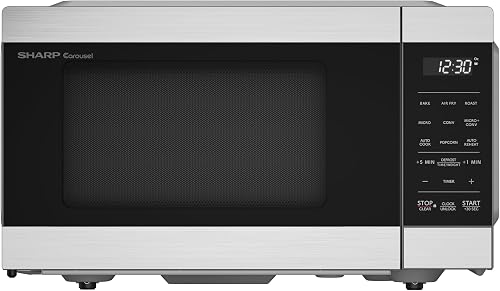 Best for one-appliance kitchens
Sharp 3-in-1 Convection Air Fry Microwave

Convection microwave vs air fryer: what is the difference?
A convection microwave offers microwave heating and fan-driven oven cooking, while a separate air fryer uses circulating hot air without microwave heating. An air-fry mode is an added feature on some convection microwaves, including the Sharp here.
Microwave mode is useful for heating food that contains moisture, such as soup, cooked grains and leftovers with sauce. Stirring and standing time help heat reach the center of the meal.
Convection cooking uses hot air to bake, roast and brown food. An air fryer follows the same broad principle, with a basket or rack that exposes food to moving air.
That shared method doesn't make every appliance interchangeable. Food spacing, the cooking vessel and the selected mode all affect whether dinner comes out moist, browned or dry.
An air-fry button also doesn't make every convection microwave suitable for the same recipes. Follow the appliance's instructions for accessories, preheating and food placement.
Which appliance suits the meals you make most?
Choose by your most common cooking task, then check whether the appliance can handle the rest of dinner. A feature you use daily matters more than several modes you might use once a month.
Convection microwave vs air fryer for reheating
A convection microwave is the more useful choice for a mix of moist and crisp leftovers. Microwave mode suits soup or rice, while convection or air frying suits food whose surface should stay dry.
A separate air fryer makes sense when reheating pizza slices, fries or breaded food is a regular job. It can restore surface crispness, but leaving food in too long can dry the center.
For mixed leftovers, split the meal by texture. Warm the saucy portion in a microwave-safe dish, and crisp the breaded side separately if your setup allows it.
For frozen snacks and browned sides
A separate air fryer suits frequent small batches of frozen snacks or vegetables, especially when the microwave is already busy. Its basket gives those foods their own cooking space.
Keep pieces loosely spread, and shake or turn them when directed. A packed basket may hold dinner, but it limits the air reaching each piece.
A combo suits the same tasks when you don't need microwave mode at that moment. The tradeoff is sharing one cavity, rather than keeping two cooking stations available.
For baking and larger dishes
A convection microwave can be useful for occasional baking or roasting when your cookware fits its cavity. Check the usable dimensions and the recipe guidance before planning meals around it.
The Chefman models also support baking and roasting, but food and bakeware must fit inside their baskets. Neither basket volume nor microwave cavity volume tells you whether a particular baking dish will fit.
Who should choose a combo, and who should skip one?
Choose a combo when you're replacing a microwave and want baking or crisping from the same counter space. Skip it when your household regularly needs to microwave one dish while air frying another.
A combo is a practical fit for someone who warms breakfast, reheats lunch and occasionally crisps a side at dinner. Those jobs happen at different times, so one appliance can cover the routine.
It also suits a kitchen where adding a second appliance would remove the last useful food-prep area. Compare the space gained against any limits on your usual portions.
Skip the combined approach if dinner often means reheating several plates while a side cooks. Even with several modes, one cooking cavity still creates a queue.
If your existing microwave works well, replacing it just to gain air frying may add features you don't need. Read whether a microwave air fryer combo is worth it before making that switch.
Who should choose a separate air fryer?
Choose a separate air fryer when crisping is the missing job in your kitchen. Skip it if you mainly warm drinks, heat soup or reheat meals that need to stay moist.
Separate appliances let you heat rice while vegetables cook, or warm sauce while breaded food crisps. That overlap can matter more than having several cooking methods in one unit.
A fryer also suits a household with an existing microwave that everyone already knows how to use. You can keep that routine and add another cooking method alongside it.
Skip a basket model if your usual meals need wide trays or if you dislike cooking in batches. A full-size oven may already handle those meals with less shuffling.
How much cooking capacity do you need?
Choose capacity by food spread in a usable layer, rather than by the largest volume number. Cubic feet and quarts measure different spaces and don't offer a useful direct comparison.
The Sharp has a 0.9 cu ft cavity and a 10.6 in glass turntable. Its included basket and baking/roasting pan determine how you arrange food for the dry-heat modes.
Chefman recommends its 6 qt model for 3–5 people and its 4 qt model for 2–4 people. Treat those as meal-planning guides, since a side of vegetables takes less room than several main portions.
Think through your largest regular batch. If you're cooking chicken pieces, each needs room around it; if you're making fries, shaking helps expose pieces that start underneath others.
An extra batch means more than extra cooking time. You'll also need a plan to keep the first portion warm without trapping steam and softening its crust.
For families, choose around a normal weeknight meal rather than a snack. For one person or a couple, a smaller basket can be enough if you don't expect it to hold the whole dinner.
Which setup fits your counter safely?
Measure the full working area, including ventilation and room to remove hot food. A body that fits between two appliances may still lack the clearance needed for cooking.
The Sharp measures 15.77 in deep, 19.6 in wide and 11.38 in high. The Chefman 6 qt measures 14.88 in deep, 11.1 in wide and 11 in high.
The Chefman 4 qt measures 13.82 in deep, 10.04 in wide and 10.24 in high. Either Chefman takes less counter area by itself, but keeping a separate microwave changes the total.
Leave enough space to pull out a fryer basket and set it on a suitable heat-resistant surface. For the combo, check door movement and whether you can lift a hot pan out comfortably.
Follow each manual's clearance and outlet instructions, and keep vents clear. Cabinet storage between uses doesn't mean an appliance can run inside that cabinet.
Use the countertop microwave sizes and dimensions guide to plan the footprint. The small countertop microwave guide helps if you decide to keep microwave cooking separate.
Our small-kitchen microwave placement ideas can help you preserve both appliance space and a useful prep area.
How do you get better results from either appliance?
Use the right mode, cookware and food spacing before changing the cooking time. Many disappointing meals come from treating microwave heating and hot-air cooking as the same process.
Match cookware to the active mode
Use microwave-safe cookware for microwave mode. For convection or air frying, use accessories and cookware approved for those modes in the appliance manual.
Don't assume a container marked microwave-safe can handle oven heat. Likewise, use a metal rack or pan in a microwave or combined cycle only when the manual specifically permits it.
A combo's cavity and accessories can remain hot after convection cooking. Use oven mitts, and check the surface before putting a microwave-safe container inside.
Leave room for moving air
Spread food out and avoid blocking basket openings with oversized liners. Air needs a path around the food to brown its surface.
Shake fries or turn larger pieces when directed, rather than relying entirely on a preset. With a new recipe, check early and add time as needed.
Adjust for the food, not just the button
Pat washed vegetables dry before seasoning them, and use a light coating of oil when the recipe calls for it. Extra surface water delays browning, while excess oil adds grease to clean up.
Use preheating when the manual or recipe requires it. A preset is a starting point, and a food thermometer is the better way to check safe doneness for meat and poultry.
For mode-by-mode help, read how to use a convection microwave.
Which appliance is easier to keep clean?
Choose the setup whose removable parts you'll clean after cooking. Grease and crumbs left behind can smoke during later hot-air cycles.
The Sharp has a stainless steel interior and a dishwasher-safe air-fry basket. Check its care instructions separately for the glass turntable and baking/roasting pan.
Both Chefman models have nonstick baskets and dishwasher-safe baskets and racks. Let hot parts cool before cleaning, and avoid abrasive pads that can damage the finish.
Wipe splashes before they harden, and remove crumbs from accessible areas as directed. Use a soft sponge around nonstick surfaces and dry removable parts before putting them back.
Don't immerse the appliance body or spray cleaner into vents. A little care after each meal is easier than removing baked-on grease after several cooking cycles.
Which of these 3 appliances fits your kitchen?
The Sharp suits appliance consolidation, while the two Chefman models suit kitchens that already have microwave cooking covered. Choose between the Chefmans by your normal portions and available counter space.
Sharp 3-in-1 Convection Air Fry Microwave
Score: 7.2/10
Choose the Sharp when microwave cooking comes first and crisping is a useful extra. Its 900 watt microwave, preset controls and +30 key cover routine reheating, while the other modes add more ways to prepare meals.
Multi-stage cooking can combine up to 3 functions for defrosting, cooking and crisping. Follow Sharp's food and accessory instructions before planning a sequence, especially when starting with raw meat.
Skip it if several people need the microwave while dinner is air frying. Its strength is replacing separate appliances, rather than creating another independent cooking space.
Chefman 6 Qt Air Fryer
Score: 8.2/10
Choose the larger Chefman for regular shared sides or batches that would crowd the smaller model. Its Hi-Fry feature raises the heat during the final 2 minutes, which is useful when a recipe needs a hotter finish.
The touchscreen allows manual time and temperature settings alongside 4 presets. A halfway shake alert helps you remember to move food, though larger pieces may need turning instead.
Skip it if your usual portion is small and the extra basket space would mostly sit empty. It also needs a permanent working area or a convenient place to store it between meals.
Chefman 4 Qt Air Fryer
Score: 7.9/10
Choose the smaller Chefman for snacks, sides and modest meals when counter width is tight. It keeps air frying separate from your microwave without taking as much room as the larger Chefman.
Its halfway shake alert is useful for loose foods such as fries. Plan to turn larger pieces yourself, and leave space rather than filling the basket simply because more food fits.
Skip it if you regularly cook several main portions at once. Also confirm its supported temperatures with Chefman if a specific high-heat recipe is essential to your choice.
What should you buy: convection microwave vs air fryer?
Pick the Sharp when replacing your microwave and combining cooking jobs matters most. Pick the larger Chefman for shared air-fried batches, or the smaller Chefman for modest portions alongside an existing microwave.
Before ordering, measure your counter and picture one ordinary dinner from start to finish. If one dish needs microwave heating while another crisps, separate appliances fit that routine better.
For more combined options, browse microwave air fryer combos. For a closer decision based on keeping your current microwave, read the microwave air fryer combo vs air fryer comparison.
Sources
- Sharp SMC0985KS product page
- Chefman 6 qt air fryer product page
- Chefman 4 qt air fryer product page
Frequently asked questions
Is a convection microwave the same as an air fryer?
No, a convection microwave combines microwave heating with fan-driven oven heat, while an air fryer cooks with circulating hot air and has no microwave function. Some convection microwaves add a dedicated air-fry mode and basket, so check the functions and accessories of the model you plan to buy.
Can a convection microwave replace an air fryer?
Yes, a convection microwave with an air-fry function can replace a separate fryer if its usable basket space suits your meals. Choose separate appliances when you regularly need microwave reheating and air frying at the same time, or when your usual portions would require too many batches.
Does an air fryer replace a microwave?
No, an air fryer can reheat foods that benefit from a dry, crisp surface, but it doesn't provide microwave heating. Keep a microwave for tasks such as warming drinks, heating soup and reheating moist leftovers; use the air fryer for foods such as fries, breaded snacks and roasted vegetables.
Which takes up less counter space?
Either Chefman here has a smaller body than the Sharp, but a separate microwave also needs room if you use both appliances. Compare the whole setup, including ventilation, door movement and basket removal, rather than choosing by the width of the air fryer alone.
Which is better for a family?
A separate air fryer often suits families that need to heat one dish while crisping another; Chefman recommends its 6 qt model for 3–5 people, but food shape and portion size still matter. Check usable basket area, since a deep pile of food can need extra batches for even browning.


